Designing with less
Restraint is not an aesthetic. It is a decision about what a page is for, made early enough to hold.

June Ashworth
Writer and editor
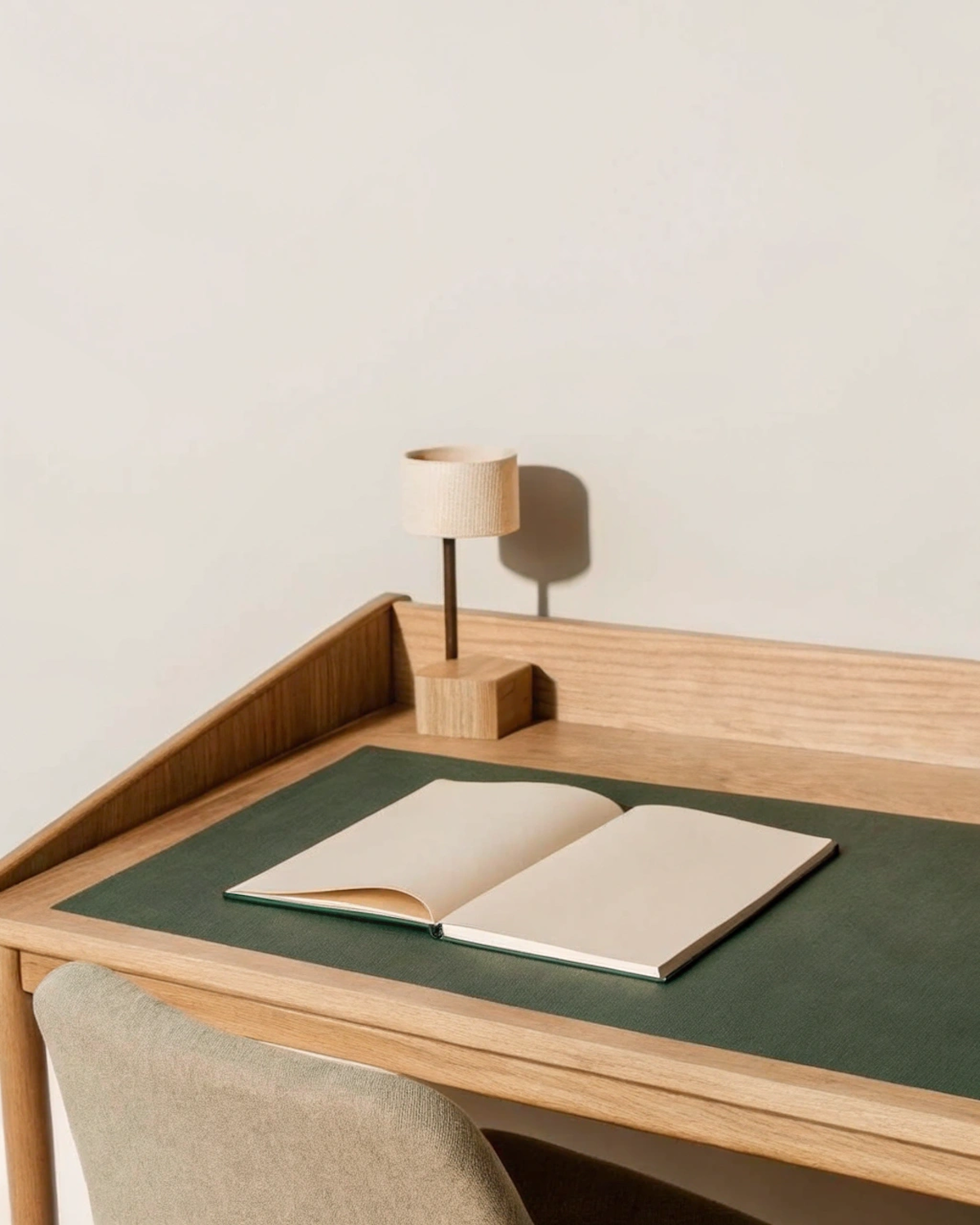
Minimal design has an image problem. It has been photographed so often that people now mistake it for a look: white space, a thin sans serif, one tasteful photograph of a chair. That is a style, and styles go out of season.
The useful version is older and duller. Decide what the page is for, then remove what does not serve it.
Subtraction is a decision, not a taste
Every element on a page competes for the same attention. A second call to action does not add a second chance, it halves the first one. A third heading level does not clarify a hierarchy, it announces that you could not decide which two mattered.
When I cannot bring myself to cut something, it is almost always because cutting it would mean admitting the page has one job rather than four.
Three questions that do most of the work
- What should a stranger remember ten seconds after leaving?
- What is the single action worth taking here?
- What would break if I deleted this element?
If the honest answer to the third is nothing, the element is decoration, and decoration is fine as long as you know that is what you are buying.
Less is not about how much sits on the page. It is about how much of it is load-bearing.
Restraint costs more, not less
A dense page hides indecision. A sparse one cannot. When there are six elements, each one is inspected, and the writing has to be genuinely good because there is nothing to hide behind.
This is why spare work so often takes longer, and why simple is a poor word for it. The simplicity is in the reading, never in the making.
Where I break the rule
Documentation. Dashboards. Anything a person arrives at already knowing exactly what they want. Density is a kindness there, and airy layouts turn a thirty-second lookup into a scroll.
The principle survives the exception. Decide who is arriving and what they need, then take away everything else. Sometimes what they need is a lot.
Written by
June Ashworth
Writer and editor
June writes about attention, craft and the small habits that hold a working life together. She spent nine years editing other people's books before starting Marginalia as a place to think in public.